

Showing posts with label Phenomenology of World Religions. Show all posts
Showing posts with label Phenomenology of World Religions. Show all posts
Sunday, August 16, 2015

Monday, January 14, 2013
Chapter 27: Non-Canonical - Gospel of Mary Magdala
Subject Labels:
Gnostic,
Lost Gospels,
Mary Magdalene,
Phenomenology of World Religions
Phenomenology of World
Religions ©
Chapter 27
Gospel Mary Magdala (Magdalene)

Chapter 13: Sword of Islam
Subject Labels:
Islam,
Islamic Fascism,
Phenomenology of World Religions,
Religious Intolerance,
Theocracy,
Video
Phenomenology of World
Religions ©
Chapter 13
Sword of Islam
ISLAMIC EMPIRE GROWS

Abu Bakr
was the father-in-law of Muhammad and his first successor. He was given the
command of the faithful as Khalifah (Caliph, meaning “deputy”). Several tribes refused to
accept his right to rule and a war broke out called Ridda, fought by Abu
Bakr and his general Khalid ibn al Walid. The success in that battle and
battles thereafter against Persia and Byzantine initiated a series of war of
conquest outside the Mohammed Arabian peninsula.
Their army had become formidable with dedicated followers of Islam, swordsmen
mounted on camels and able archers on horseback that came out of the desert and
struck the heart of Persia and Byzantine empires. The two empires were already
becoming weak and their army was not organized sufficiently to defeat the
Arabs. The Arabs soon conquered Syria, Palestine, Iraq, Egypt, and Persia. The Caliph Umar conquered Jerusalem in 640 and
guaranteed the preservation of the Christian holy places there.
Sunday, April 22, 2012
Chapter 18: Wicca - Old Pagan Religion Renewed
Subject Labels:
Inquisition,
Mother Goddess,
Neo-Paganism,
Phenomenology of World Religions,
Wicca,
Witchcraft

Wicca is a
modern neo-pagan religion that is based upon an ancient pagan religion
that was common among the Celts of northern Europe, and in Britannia
(so named by Julius
Caesar who conquered and made it part of the Roman Empire)
where the mystic cult of Druidism originated based upon the “Mother”
fertility goddess whose consort was a horned god. It is a mystery
religion that has different theological concepts or denominations,
some monotheist, original goddess worship, such as the Dianic
Wicca, Cochrane's
Craft, and polytheism. Denominations are considered
traditions within the Wiccans: Gardnerian
and Alexandrian
Wicca follow the concepts of Gerald
Gardner.
Saturday, March 17, 2012
Chapter 20: Christology: Unitarianism
Subject Labels:
Calvinism,
Christology,
Early Christianity,
Heresy,
Phenomenology of World Religions,
Unitarianism
Phenomenology
of World Religion
Chapter
20 ©
[Christology: Unitarianism]
[Christology: Unitarianism]

Unitarianism is a proper noun in
English that is a religious “ism” movement like Calvinism,
Anabaptism,
Adventism,
Wesleyanism,
Protestantism,
Catholicism,
and so on. It is a sect of Protestantism (that is a sect of
Catholicism). One can readily see that Christianity, for all
its similarities between sects and theological diversity is one of
the most complex to understand the differences, despite being based
upon the identity of Jesus (the Galilean) from Nazareth, known as
Christ.
In the case of
Unitarianism, it is a actually a description of several forms
of Christianity; and can be described as the belief that God is one
personality. That is the main difference between the major sects
theological thought in what is called Trinitarianism.
Monday, July 19, 2010
Chapter 9: Early Christianity - Organizing a New Religion
Subject Labels:
Canon,
Christianity,
Early Christianity,
Early Church,
Historians,
New Testament,
Phenomenology of World Religions,
Sacred Text
Fall and Rebirth of Rome

Four hundred years after Christ’s birth, once again a great change had occurred and the greatest civilization in the world came to an end; but out of the ashes arose the beginning of another and the Christians who had struggled for so long to exist became the founders of the new Rome. The once persecuted people called Christians became the founding principle of the new
Saturday, March 20, 2010
Chapter 8: Jesus of Nazareth, The Christ of Christianity
Phenomenology of World Religion
Chapter 18
Jesus of Nazareth - Foreword
There are also many things which Jesus did, that if they should be written, I suppose that the world itself could not contain all the books that would be written. Saint John the Apostle/Evangelist
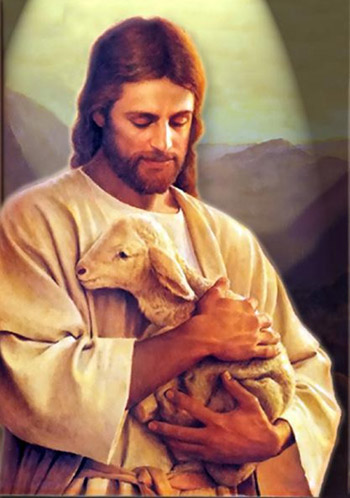
Introduction to Chapter Eight
Before I begin the complex examination of the historical and spiritual character known as Jesus of Nazareth or Jesus the Christ, I would like to inform the reader that scripture passages quoted come from the King James Version of the Holy Bible, unless otherwise noted. I do this because I feel that re-translated scriptures and text from the Holy Bible, Old and New Testaments have corrupted its meaning. It is like whispering a phrase in a circle of friends and by the time it reaches back to the originator, it is out of context. The Holy Bible is an anthology of texts, Hebrew in origin and later written in Hebrew, Greek, Latin, Aramaic, Middle English and many other languages, totaling to about 80 languages and dialects.
Monday, December 28, 2009
Chapter 7: African Traditional Religion

This chapter deals with traditional and ethnic religions of Africa of the indigenous people who originated from the continent. Christianity, Judaism, and Islam has had a marked influence upon the continent since early Christianity spread from Rome to those nations that were under Roman control during the Roman Empire’s eventual collapse. Mohammedism or Islam spread in the 7th century AD and competed with Christianity and Judaism, specifically in North Africa .
Most people have been misinformed about Africans concerning their culture and religion, mostly because of Hollywood films concerning the continent, especially those produced prior to 1960.
Sunday, December 27, 2009
Chapter 6: Asia, Far East, and Polynesian Religions-Culture
Subject Labels:
Asian,
Buddhism,
Hinduism,
Phenomenology of World Religions,
Shamanism

Traditional eastern religions like Hinduism, Buddhism, Sikhism, Jainism, Zoroastrianism (Parsis), Taoism, Confucianism, Shintoism, and other eastern cults have been categorized as eastern religions, but geographically it is East Asia, South East Asia , Indonesia Malaysia Polynesia , et cetera. Within the category of eastern religions, on the basis of religion, one would have to include Islam and Judaism along with early Christianity. But this is the accepted nomenclature towards geographical description concerning religious history by theological scholars and historians. In effect, Judaism and Islam remain as traditionally eastern religions, while Christianity spread and took foothold in the western world. However, with Islam, or rather the orthodox conquering Islam that originated in the 7th century AD is increasingly spreading westward, and as in the Crusade period, endangers the established Christian sects of the western world and Islamic Fascism whose jihad and sharia ideology endangers all free nations. This will be discussed in later chapters, along with eastern sects and religions that are not in the mainstream of Eastern Asia.
Chapter 5: Religion and Culture of the Americas
Subject Labels:
First Nation,
Incantations,
MesoAmerica,
Native American,
Paganism,
Phenomenology of World Religions
New World - Old Culture
Inca
Few ancient civilizations are as old as the Inca in Peru, the only older ones were in Egypt and Babylonia; as far as the Americas, the Inca or Tiwantinsuya is the older than Meso-America, or the various spiritual religions of the tribes of the Native Americans in North America. The Inca historic record were recorded by oral tradition, on stone, pottery, gold and silver jewelry, and woven into the tapestry of the artisans.
The Inca of Peru were fascinated by the Western visitors of over 400 years ago, called the Spanish Conquistadors, who plundered and converted them until they all but became extinct. The treasures brought back to the Old World of Europe transformed the European economy and left the Inca civilization in ruin. The Inca had a central government over the various tribes, most who hid in obscure mountain hideaways.Saturday, December 19, 2009
Chapter 4: Hebrews: Ancient Historians - Part B
Subject Labels:
Historians,
Judaism,
Passover,
Phenomenology of World Religions,
Philosophy,
Scriptures,
Theology,
Zionism
Roman Empire to Roman Catholic Church
While the history of Judea and Israel is long and complex, the Roman period of Judea is also complex in itself. Because another chapter deals with Christianity, not much is written here concerning the Jews from the Messiah era up to Constantine the Great, who was the first Christianized ruler of Rome, and after all, Jesus of Nazareth is part of Jewish history; however the background of the Christian movement and formation of the first organized Church is in the chapter concerning Christianity.For the Jews, the medieval period began with the reign of Constantine the Great (306-337 AD). He was the first Roman emperor to issue laws that limited the rights of Jews as citizens of the Roman Empire. This was due to the Christians growing power within the Roman Empire and the influence upon its rulers. Most of the imperial laws that dealt with the Jews since the days of Constantine are found in the Latin Codex Theodosianius of 438 AD, and the Latin and Greek code of Justinian of 534 AD. These texts allow the researcher to trace the history of the progressive deterioration of Jewish rights.
The laws of Constantius (337-361), forbade intermarriage between Jewish men and Christian women. Jews were also not allowed to have slaves. Actually, this prohibition was to keep slaves at minimum, as well as keep from slaves converting to Judaism; but whatever be the case, it was detrimental to the economic life of the Jew - giving Christians an edge as far as the economy.
The law of Theodosius II (408-410) prohibited Jews from holding any office of honor in the Roman state. The building of new synagogues was forbidden, which was really an official rule that was already established previously. In the Eastern Roman Empire anti-Christian laws were stricter against Jews and persecution was greater because they believed that the Messiah was returning in 440 and therefore stayed close to Jerusalem where they thought Christ would return. This sort of treatment of the Jews carried on into the historical period when the Muslims took over the region. The Christian Church looked upon Judaism as an old rival, mostly because it was the Pharisees that had caused the death of Jesus of Nazareth, the prophet-teacher-Messiah whose name was used for their religion. Some later would blame the Jewish people, oddly disregarding the fact that Jesus the Christ was himself, a Jew, who even followed the old ways of Passover during his preaching of a new era in the life of humanity. Just as his parents, Jesus of Nazareth heeded the tradition of Passover and encouraged it. Constantine in 325 changed the celebration of Easter on the calendar so that it did not coincide with the Jewish Passover.
Chapter 4: Hebrews: Ancient Historians - Part A
Subject Labels:
Holidays-Festivals,
Judaism,
Passover,
Phenomenology of World Religions,
Qumran Library,
Talmud,
Torah
Of the three great monotheistic religions, Judaism is the oldest of the other two major monotheistic religions – Christianity and Islam; except in the case of Zoroastrianism. Christianity really an extension of the story of the Hebrews because the founder and his disciples were Jewish.
Hebrew Sacred Texts
The Hebrew, actually what the language is known as are the Jewish people, have a strong belief in one true God who is the creator, ruler of this world and the entire universe who knows everything and sees everything. He has revealed the sacred laws of Jews in the Torah and has chosen Hebrews (Jews) and those that follow those laws and preserves the Torah and history has come to know them as the Chosen People or as Mohammed, the founder/prophet of Islam called them: “The People of the Book". But the first issue to discuss refers to that holy book, the sacred texts of Judaism and use it in the proper terminology used to describe the 38 books that make up the Hebrew Canon (Bible), referred to as the Old Testament. However, this is not entirely true and has been a point of a theological discussion and argument since the inception of Christianity and Islam. And as mentioned in the title page, archaeology has been a significant aid in constructing the past in human history, and validating what scholars and historians have written about in the course of examining theological history and philosophy.The Hebrew Scriptures are: (1) Genesis, (2) Exodus, (3) Leviticus, (4) Numbers, (5) Deuteronomy, (6) Joshua, (7) Judges, (8) Ruth, (9) First Samuel, (10) Second Samuel, (11) First Kings, (12) Second Kings, (13) First Chronicles, (14) Second Chronicles, (15) Ezra, (16) Nehemiah, (17) Esther, (18) Job, (19) Psalms, (20)Proverbs, (21) Ecclesiastes, (22) Song of Solomon, (23) Isaiah, (24) Jeremiah, (25) Lamentations, (26) Ezekiel, (27) Daniel, (28) Hosea, (29) Joel, (30) Amos, (31) Obadiah, (32) Jonah, (33) Micah, (34) Nahum, (35) Habakkuk, (36) Zephaniah, (37) Haggai, and (38) Malachi. The Apocryphal or Deuterocanonical books are not in the Hebrew Bible, but can be found in the Catholic and Protestant bibles. The New Testament concerns Jesus of Nazareth, his life and his teachings, and is not found in the Hebrew Canon.
Wednesday, December 16, 2009
Chapter 3: Religion of the Pharaohs, Part B - Dynasties
Subject Labels:
Dynasty,
Historians,
Pharaoh,
Phenomenology of World Religions,
Pyramids

Continuation of Part A - Chapter 3, Religion of the Pharaohs
In the pre-dynastic period Paleolithic inhabitants settled in the fertile Nile Valley. The early period of rulers seemed to have grown and matured during the Naqãda rulers from Badarian. By the time the 1st Dynasty between 2925 through 2775 BC came, the kings introduced writing, bureaucratic administration, and organized religion. The beginning of this historical period there are writings that were collected as documents and transferred to monuments such as the Palermo Stone. The first real king of Egyptian history, Menes, was given credit for founding the capital of Memphis and elaborates irrigation canals. He was followed by a king named Ahas whose tomb at Abydos was more elaborate than previous tombs. During the 1st Dynasty papyrus was invented for writing and there was an increase in prosperity. Thousands of tombs of the wealthy have been found throughout the country from this period. The richest tombs contained metal, ivory, and other materials, such as stone vases. The titles Golden Horus and Dual King were given to the kings during this period, which was associated with Upper and Lower Egypt. Later these would be written in a cartouche.

Tuesday, December 15, 2009
Chapter 3: Religion of the Pharaohs, Part A
Subject Labels:
Book of Dead,
Egyptology,
Incantations,
Ka,
Phenomenology of World Religions,
Soul,
Temple
Phenomenology - Religion of the Pharaohs
Chapter 3, Part A- Religion and Culture ©

To discuss Egypt’s religious history one must look at its overall history, for religion has been an intricate part of Egypt’s every day life since the forming of its magnificent ancient empire. The Greek Historian marveled at the Egyptian’s religious devotion and loyalty to his family and traditions. As Will Durant explains so well concerning the wonders of Egypt discovered through texts, tomb paintings, tablets and monument inscriptions in his book Our Oriental Heritage [1] –
The recovery of Egypt is one of the most brilliant chapters in archaeology. The Middle Ages knew of Egypt as a Roman colony and a Christian settlement; the Renaissance presumed that civilization had begun with Greece; even the Enlightenment, though it concerned itself intelligently with China and India, knew nothing of Egypt beyond the Pyramids. Egyptology was a by-product of Napoleonic imperialism. When the great Corsican led a French expedition to Egypt in 1798 he took with him a number of draughtsmen and engineers to explore and map the terrain, and made place also for certain scholars absurdly interested in Egypt for the sake of a better understanding of history. It was this corps of men who first revealed the temples of Luxor and Karnak to the modern world; and the elaborate Description de L'Egypte (1809-13) which they prepared for the French Academy was the first milestone in the scientific study of this forgotten civilization.
Monday, December 14, 2009
Chapter 2 - Ancient Greek, Hebrew, and Zarathustra
Subject Labels:
Archangel,
Canon,
Hellenic,
Judaism,
Mythology,
Pentateuch,
Phenomenology of World Religions,
Qu'ran,
Septuagint,
Stoicism,
Talmud,
Tanakh,
Torah,
Vulgate
Chapter 2
Phenomenology of World Religion ©

Ancient Greek, Hebrew, and Zarathustra
In this chapter, discussion will focus on the Greek and Hebrew religions, but will occasionally contain discussion about other religious cultures of the ancient world because of their impact and cross-culture sharing of ideas, et cetera. It is basically an overview. The original biblical texts known as the Old Testament [I] were written in Hebrew and later, when the Greek civilization grew to influence other cultures in the Greek language. The Greek translated biblical texts are known as Septuagint Bible, and later when translated to Latin, Vulgate.The learning and knowledge that we have, is, at the most, but little compared with that of which we are ignorant.
Plato[Philosopher, Teacher, Founder of the Athens Academy]
Friday, February 20, 2009
Chapter 1 - Intro to Phenomenology of World Religion
Subject Labels:
Phenomenology of World Religions,
Theology
Chapter 1
Introduction to Phenomenology of World Religion ©
The modern world is the child of doubt and inquiry, as the ancient world was the child of fear and faith.
Clarence Darrow, 1929

Subscribe to:
Posts (Atom)