Pages

I have always imagined that Paradise would be a kind of library.
Jorge Luis Borges

So have I become your enemy by telling you the truth?
Saint John, Letter to Galatians 4:16

Freedom of Religion - Freedom from Religion - Freedom of Public Display of Religion and Traditions

We establish no religion in this country, nor will we ever. We command no worship. We mandate no belief. But we poison our society when we remove its theological underpinnings. We court corruption when we leave it bereft of belief. All are free to believe or not believe; all are free to practice a faith or not. But those who believe must be free to speak of and act on their belief.
--
Ronald Reagan (Temple Hillel Speech, 1984)

Showing posts with label Holy Roman Catholic Church. Show all posts

Friday, February 19, 2016

A Treatise Concerning Christians and the 21st Century

I, like Thomas Jefferson, values logical philosophy; especially when discussing theology and politics. Those are two subjects where people turn off the logical portion of their brain and let emotion cloud their judgment and belief. Tradition can be a good thing, but only if it is supported by logic and facts, not superstition and blind faith. Thomas Jefferson created his own reference Bible, concerning the New Testament where he gleaned the myth from Jesus of Nazareth's parables and wise statements. He was more concerned with the spiritual world rather than the physical one. The Jefferson Bible has been reprinted several times and still available today. Indeed, the subtitle of the book is: “The Life and Morals of Jesus of Nazareth”. Using his original name description instead of “Christ”.
What prompted me to write about this is people sharing the myriad commentary and memes on my FaceBook board. They seem to ignore the fact that religion is the product of humans, not the Creator/God of the Old/New Testaments. Christianity was not founded by Jesus of Nazareth (aka Jesus of Galilee), but by his disciples who became apostles after his death.
Theology of our world's religions has fascinated me, especially the religions whose foundation and doctrine are based on an element of philosophy. It is those religions that have lasted through the centuries with 'cult' or denomination offshoots sprouting along the way.
Of course, I have paid for my use of logic instead of blind faith concerning religious clergy whose purpose of existence is to keep their flock, either by fear or indoctrination or both.

Saturday, April 19, 2014

Reflective Moments Concerning Theological and Philosophical Thoughts

In reflective moments I have decided to put away theology, in terms of theological philosophy around the world, but personal thoughts that make me, myself, an individual. I actually have been told I have the qualifications to be a certified minister, non-denominational, of course – but never had the inclination to do so. It is not within my character, or being, to stand before people gathered in some place to preach how they should run their lives, and other important duties of a true member of the clergy. 

Friday, March 14, 2014

Saint Patrick's Day: March 17th

Saint Patrick's Day, celebrated on March 17th, in the dioceses of Ireland it is a solemn and holy day of obligation and is officially called Saint Patrick's Feast Day. The original color associated with Saint Patrick was blue, but over time the color association changed to green and green ribbons and shamrocks were worn in celebration of the day was early as the 17th century. The phrase “the wearing of the green”, which means wearing a green shamrock on clothing comes from a song of the same name.
Saint Patrick is a national day in Ireland, but Irish in Europe have been celebrating it since the 9th century; and later became known as the patron of Ireland. The Feast Day was officially listed in the liturgical calender in the Catholic Church, influenced by Luke Wadding, a Franciscan scholar in the early 17th century. A solemn ceremony in the Roman Catholic Church, it is a great feast day in the Church of Ireland

Sunday, January 22, 2012

Chapter 10: Doctors of the Church


Phenomenology of World Religion©
Chapter 10
Doctors of the Church
The founding Doctors of the Church were the first to attain sainthood in a long line of saints of the Holy Roman Catholic Church, the first organized church in Christian history, established in Rome after Emperor Constantine established Christianity as a state-recognized religion. They are known for the defense of the early Church as well as establishing the Catholic doctrine. There were eight original Doctors of the Church: Saint Ambrose, Saint Augustine, Pope Saint Gregory the Great, and Saint Jerome in the Latin Church; and Saint Athanasius, Saint Basil the Great, Saint Gregory Nazianzen, and Saint John Chrysostom of the Eastern Church. In 1568, Saint Thomas Aquinas was added to the list of the original eight by Pope Saint Pius V in his promulgation: Tridentine Latin Mass.
In the 20th century, three female saints: Saint Catherine of Siena, Saint Teresa of Avila, and Saint Therese of Lisieux were added to the list of recognized Doctors of the Church bringing the total to 33. 

Tuesday, August 3, 2010

Myth Blaster: The Shroud of Turin

EarlyChristianSymbols Myth Blaster Verdict: Overall, undetermined, but so far indisputably authentic as the following will explain. Personal research shows that there is more accurate information that proves the Shroud’s authenticity than those who have been trying to disapprove it; and because of this, I believe it is up to the skeptics to disapprove the authenticity because those who have investigated the Shroud through the scientific process should not have to prove anything further. The fact that the Shroud is an natural image of a crucifixion victim is without question – the only question that may remain by skeptics is if it is truly the Jesus of Nazareth that changed the western world, inspired a new religion that developed into the most powerful Church organization in world history. Personally, I believe it is the real thing.
There is more evidence to its authenticity than not.

Saturday, March 20, 2010

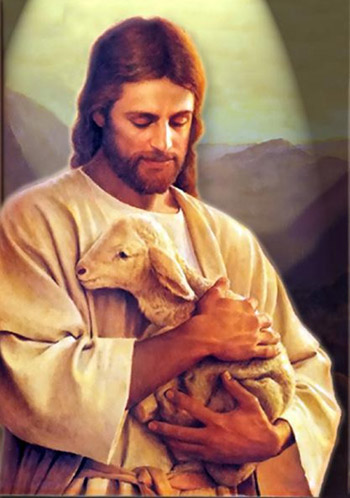
Chapter 8: Jesus of Nazareth, The Christ of Christianity

Phenomenology of World Religion
Chapter 18
Jesus of Nazareth - Foreword
There are also many things which Jesus did, that if they should be written, I suppose that the world itself could not contain all the books that would be writtenSaint John the Apostle/Evangelist

Introduction to Chapter Eight

Before I begin the complex examination of the historical and spiritual character known as Jesus of Nazareth or Jesus the Christ, I would like to inform the reader that scripture passages quoted come from the King James Version of the Holy Bible, unless otherwise noted. I do this because I feel that re-translated scriptures and text from the Holy Bible, Old and New Testaments have corrupted its meaning. It is like whispering a phrase in a circle of friends and by the time it reaches back to the originator, it is out of context. The Holy Bible is an anthology of texts, Hebrew in origin and later written in HebrewGreek, Latin, AramaicMiddle English and many other languages, totaling to about 80 languages and dialects.

Thursday, October 9, 2008

Beatification of Pope Pius XII

In an Associated Press/Reuters report, the Vatican The Holy See] has been considering Beatification of Pope Pius XII, the preliminary procedure to canonization declaring sainthood to a person. He was the Pope during the time of the Holocaust period in Nazi Germany and there have been arguments over whether or not Pope Pius XII had turned his head during the persecution of Jews or whether he remained prudent in order to secretly save Jews through his diplomacy. According to an article at MSNBC: [See also
The Vatican newspaper L’Osservatore Romano dedicated an entire page to praising Pius, including an impassioned tribute from the Holy See’s secretary of state, Italian Cardinal Tarcisco Bertone.
“It was precisely by means of a prudent approach that Pius XII protected Jews and refugees,” Bertone wrote in an introduction to a book by a nun about the late pontiff.
Last month, Pope Benedict XVI made one of the strongest defenses yet of Pius, whose death 50 years ago is being marked at the
Vatican. … Pius, as Italian prelate Eugenio Pacelli, had served as a Vatican diplomat in Germany and as the Vatican’s secretary of state before becoming pope in 1939, a few months before World War II erupted in Europe. The Vatican has started the process for Pius’ beatification, the last formal step before possible sainthood. Jews and others have accused Pius of not speaking out forcefully enough against the Holocaust. Bertone contended that research has shown that Pius “was neither silent nor anti-Semitic. He was prudent. If he had made a public intervention, he would have endangered the lives of thousands of Jews, who, upon his directive, were hidden, in 155 convents and monasteries in Rome alone …
Earlier this week, an Israeli rabbi
[Rabbi Shear-Yashuv Cohen] who became the first Jew to address bishops’ gatherings at the Vatican pointedly omitted Pius when he spoke of the change in Catholic-Jewish relations from a “long, hard and painful history.”… The rabbi said some religious leaders “did not raise a voice in the effort or save our brethren, but chose to keep silent and help secretly.”

Thursday, February 8, 2007

Investigating Scriptures and the Search for Lost Text of the Bible

In 2006 the novel The Da Vinci Code by Dan Brown was produced on film  and because of the public interest in the fictional work based upon certain historical facts, as well as conjecture that has been argued by scholars for a long time, there was a great deal of controversy over the content. A well acted and directed film, it soon became the big discussion on the Internet and there are some websites that still exist today that concern the subject material in one form or another. This information being provided as background information.

After being released and previewed at the opening night of the Cannes Film Festival, May 17th, 2006, the film was criticized by the Roman Catholic Church and bishops urged Christians to boycott the film orchestrated by the Vatican curial department by Archbishop Angelo Amato. Some of the earliest showings had protesters outside the movie theaters and critical rhetoric was prolific.